
Oklahoma City Weed Control & Fertilization
Superior Lawn Solutions is an Oklahoma City weed control and fertilization company serving homeowners across the OKC metro — Oklahoma City, Edmond, Piedmont, Mustang, Yukon, Bethany, Nichols Hills and Moore. Our 8-treatment annual program targets the specific weeds that take over Oklahoma lawns, backed by a 4.9★ rating from 123 Google reviews and no long-term contracts.
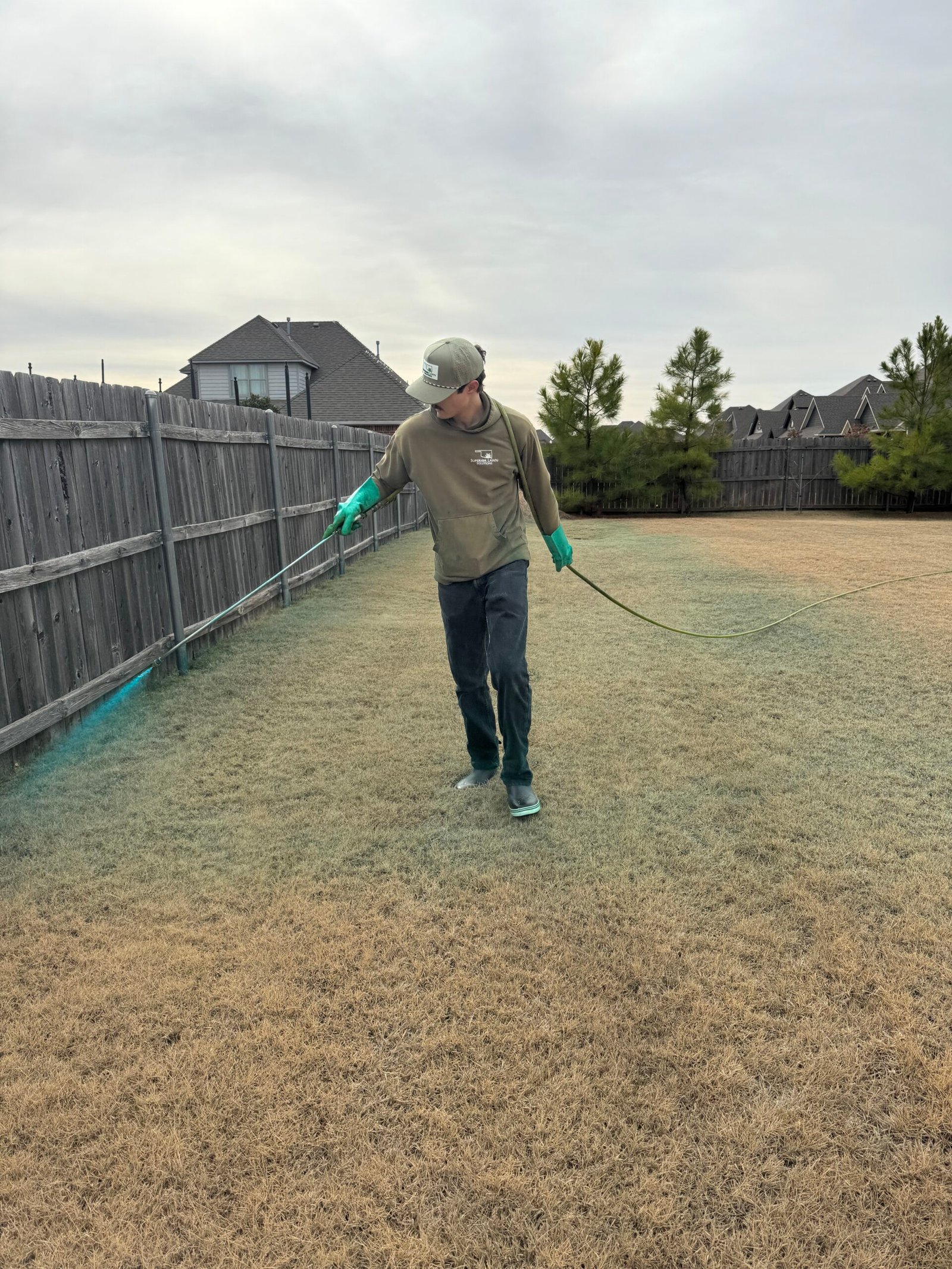
Our 8-treatment Oklahoma City lawn program
Oklahoma lawns face a long weed season — winter weeds germinate in fall, crabgrass pushes through spring, and heat stress hits in July. Our eight visits are timed to the OKC growing calendar rather than a generic national schedule.
Pre-Emergent + Winter Weed Control
First-round pre-emergent forms a barrier against crabgrass before soil temperatures climb, plus post-emergent control for henbit, chickweed, and annual bluegrass already up from fall.
Second Pre-Emergent + Broadleaf Control
A second pre-emergent application extends crabgrass protection through the long Oklahoma spring, while broadleaf control knocks out dandelions, clover, and spurge as they emerge.
Green-Up Fertilization
Slow-release granular fertilizer as Bermuda comes out of dormancy, feeding the lawn for a thick, even green-up and helping turf outcompete summer weeds.
Grassy Weed Control
Targeted treatments for dallisgrass, nutsedge, and crabgrass escapes — the grassy weeds that broadleaf products alone will not touch.
Summer Fertilization + Spurge Control
Heat-tolerant feeding to keep Bermuda growing through Oklahoma summer stress, plus spot treatment for spurge, which thrives in our thin, sun-baked areas.
Weed Spot Treatment
Spot treatment for any weeds that survive the earlier rounds — spurge, nutsedge, and crabgrass escapes get hit again before they seed out.
Fall Fertilization
Fall feeding builds root reserves ahead of dormancy — the single most important application for how your lawn looks next spring.
Fall Pre-Emergent + Winter Weed Control
Fall pre-emergent stops henbit, chickweed, rescuegrass, and annual bluegrass from germinating, so you are not fighting a winter weed takeover in February.
Timing shifts with the weather each year — soil temperature, not the calendar, decides when pre-emergent goes down.
Additional services
Aeration
Core aeration relieves soil compaction so water, oxygen, and nutrients reach the root system.
Top Dress
A thin layer of quality soil or compost spread over the lawn to level low spots, build organic matter, and improve how Oklahoma clay holds water and nutrients.
Grub Control
Protects your turf's roots from grub damage and keeps yard-digging wildlife away.
Common weeds we treat in Oklahoma City lawns
These are the weeds we actually pull up in OKC-metro yards, and how each one gets handled.
Crabgrass
Germinates once OKC soil hits about 55°F, usually mid-March. Pre-emergent timing is everything — once it is up, it seeds and spreads fast in thin Bermuda.
Dallisgrass
Coarse, clumping, and far tougher than crabgrass. It regrows from underground rhizomes, so it needs repeat targeted treatments across the season.
Nutsedge
Bright yellow-green with a triangular stem, loves the wet, compacted spots in Oklahoma clay. Only sedge-specific products will control it.
Spurge
Low, mat-forming, and thrives in the hot, thin, sun-baked areas along driveways and sidewalks. A July and August problem in almost every OKC lawn.
Henbit
The purple flowers taking over Oklahoma lawns in February germinated the previous fall. Fall pre-emergent is the real fix, not a spring spray.
Chickweed
Spreads into dense low mats over winter and smothers dormant Bermuda. Controlled with our fall and late-winter applications.
Rescuegrass
A cool-season grassy weed that flourishes in dormant Bermuda through OKC winters, leaving green patches in an otherwise tan lawn.
Annual Bluegrass (Poa Annua)
Light green, seedy, and prolific in fall-germinated lawns. Requires fall pre-emergent — post-emergent options in Bermuda are limited.
Dandelions
Deep taproot means pulling them does not work. Post-emergent broadleaf treatments in spring and fall are what actually reduce the population.
White Clover
Often a sign of low nitrogen. Our fertilization program plus broadleaf control handles both the clover and the reason it moved in.
Why Oklahoma City lawns need a different approach
Heavy Clay Soil
Most of the OKC metro sits on dense red clay that compacts hard and drains slowly. Compaction thins turf, and thin turf is where weeds get their opening — which is why aeration is part of the program, not an afterthought.
A Long, Split Weed Season
Oklahoma gets two full weed cycles: winter annuals germinating in fall, and summer annuals starting in March. A four- or five-visit program misses one of them entirely. Eight treatments cover both.
Bermuda, Fescue, And Zoysia
OKC yards are mostly Bermuda, with fescue in shaded Edmond and Nichols Hills lots and some zoysia. Each one tolerates different products and rates — we identify your turf type before the first application.
Summer Heat And Drought Stress
Oklahoma summers regularly break 100°F. Applying the wrong product at the wrong rate in that heat burns a lawn. Our summer visits are built around heat-safe products and roughly 1.5 inches of water per week.
Weed control across the Oklahoma City metro
We treat lawns throughout the OKC metro. Pick your city for local details:
Ready for a healthier lawn?
Get your free, no-obligation quote today.
Request My QuoteOklahoma City weed control & fertilization FAQ
When should pre-emergent be applied in Oklahoma City?
Our first pre-emergent goes down in late February to mid-March, before soil temperatures reach about 55°F and crabgrass germinates. We apply a second round a few weeks later, because Oklahoma springs are long enough that one application often breaks down before the germination window closes. Fall pre-emergent goes down in October to stop henbit, chickweed, rescuegrass, and annual bluegrass.
How many treatments does an Oklahoma lawn actually need?
Eight. Oklahoma has two separate weed seasons — winter annuals that germinate in fall and summer annuals that start in March — plus a fertilization schedule that has to work around extreme summer heat. Programs with four or five visits typically skip fall entirely, which is why those lawns are full of henbit every February.
How do I get rid of spurge in my Oklahoma lawn?
Spurge is a summer annual that thrives in hot, thin, sun-baked turf, so control is two-part: post-emergent treatment during summer to kill what is growing, and fertilization plus aeration so the turf thickens and stops leaving open ground for next year's seed. Pre-emergent in spring reduces the population significantly.
What are the most common weeds in Oklahoma City lawns?
Crabgrass, dallisgrass, nutsedge, spurge, henbit, chickweed, rescuegrass, annual bluegrass (Poa annua), dandelions, and white clover are what we see most across the OKC metro. All of them are covered by our program.
When should I fertilize Bermuda grass in Oklahoma?
Bermuda should be fed once it has fully greened up — typically late April into May in the OKC area — then again in early summer and once more in early fall. Fertilizing dormant Bermuda in early spring mostly feeds the winter weeds instead of the grass.
Should I water my lawn, and how much?
Yes — most Oklahoma City lawns need about 1.5 inches of water per week, delivered in one or two deep waterings rather than daily light sprinkles. Deep, infrequent watering drives roots down, which matters a lot in our clay soil and summer heat.
Are liquid or granular fertilizers better?
We primarily use granular fertilizer because it releases nutrients gradually between treatments, giving steady, long-lasting feeding instead of a short burst that fades in two weeks.
Do I need aeration in Oklahoma City?
Almost certainly. The metro sits on heavy red clay that compacts under foot traffic, mowing, and summer drying. Core aeration once a year opens the soil so water, oxygen, fertilizer, and pre-emergent can reach the root zone.
How often should grub control be applied?
One preventative grub control application per year, timed to catch grubs before they damage the root system. Waiting until you see dead patches means the damage is already done.
Are your treatments safe for pets and kids?
Yes — all products are applied according to EPA guidelines and label rates. We ask that pets and children stay off treated areas until the application has dried, usually a couple of hours.
Do you require a contract?
No. There are no long-term contracts. We keep customers by results, and you can stop the program at any time.
What areas do you serve?
We serve homeowners across the Oklahoma City metro, including Oklahoma City, Edmond, Piedmont, Mustang, Yukon, Bethany, Nichols Hills, and Moore.